 RENDPROP
Short answer. A listing with a view is a timing problem before it is a photography problem. Work out which direction the view faces, book the hour when the sun is behind or beside the camera rather than in the window, and plan two short visits: one for the interiors and one for the view at its best hour, often dusk. The honest exposure that shows the room and the view together beats a window pull that invents a brighter day.
A listing with a view is a timing problem first and a photography problem second. Find out which direction the view faces, then book the hour when the sun is behind or beside the camera rather than blazing through the window, and plan two short visits instead of one long one: interiors when the rooms are lit, the view at its own best hour, which for most views is early morning or dusk. The frame that shows the room and the view together, honestly exposed, is worth more than any edit that invents a clearer day.
Find which way the view faces, then book the hour
Stand in the room with the best view and use the compass on your phone. The direction tells you the hour.
- View to the east. Morning light comes straight into the lens and the view is a silhouette. Shoot it in the afternoon, when the sun is behind the house and lighting whatever you are looking at.
- View to the west. The reverse. Morning for the view, when the sun behind you lights the valley or the water. Dusk for the sky, with the room lit by lamps so it does not go black against the sunset.
- View to the north. Soft, even light most of the day. The easiest view to shoot; midday is fine.
- View to the south. Hard light for most of the day with the sun somewhere in the frame. Early morning or late afternoon, when the sun has moved to one side.
City views are the exception to the daylight rules: they are usually best at dusk, in the quarter hour when the sky still has colour and the lights have come on, with the room lit from inside.
Two visits beat one long one
The hour that flatters the view is rarely the hour that flatters the interiors, so stop trying to do both in one booking.
Visit one is a normal interior shoot: late morning, every lamp on, landscape photos of every room, with the view rooms shot from angles that include the window but do not depend on it. Visit two is short and specific: the view, from the three or four places a buyer would actually stand, at the hour you worked out from the compass. The deck, the primary bedroom window, the living room sofa, the kitchen sink if it looks out. Portrait frames of the same views for the social cut.
Window pulls, glare and the honest exposure
A window pull, where the photographer exposes separately for the room and for the view and blends them, is standard practice and shows what a person standing in the room actually sees: a lit room and a visible view. Done well it is the honest frame. Done badly it shows a view brighter and sharper than anyone in that room will ever see, with no reflection on the glass and no haze in the distance, and buyers who have stood at windows know the difference.
The test is whether the frame matches the experience. If the view in the photo is what the buyer will see at that hour on a reasonable day, it is honest. If it is clearer than the best day the house has ever had, it is not. More on the technique and its limits is in window pull and view photos: showing what is outside.
Haze is the thing to be straightforward about. If the valley is hazy most summer afternoons, a frame from a rare clear morning is honest but should not be the only one; include a typical-day frame as well. An edit that removes haze that is actually there most days is a misrepresentation of the view, which for this listing is the product.
The hillside house facing west
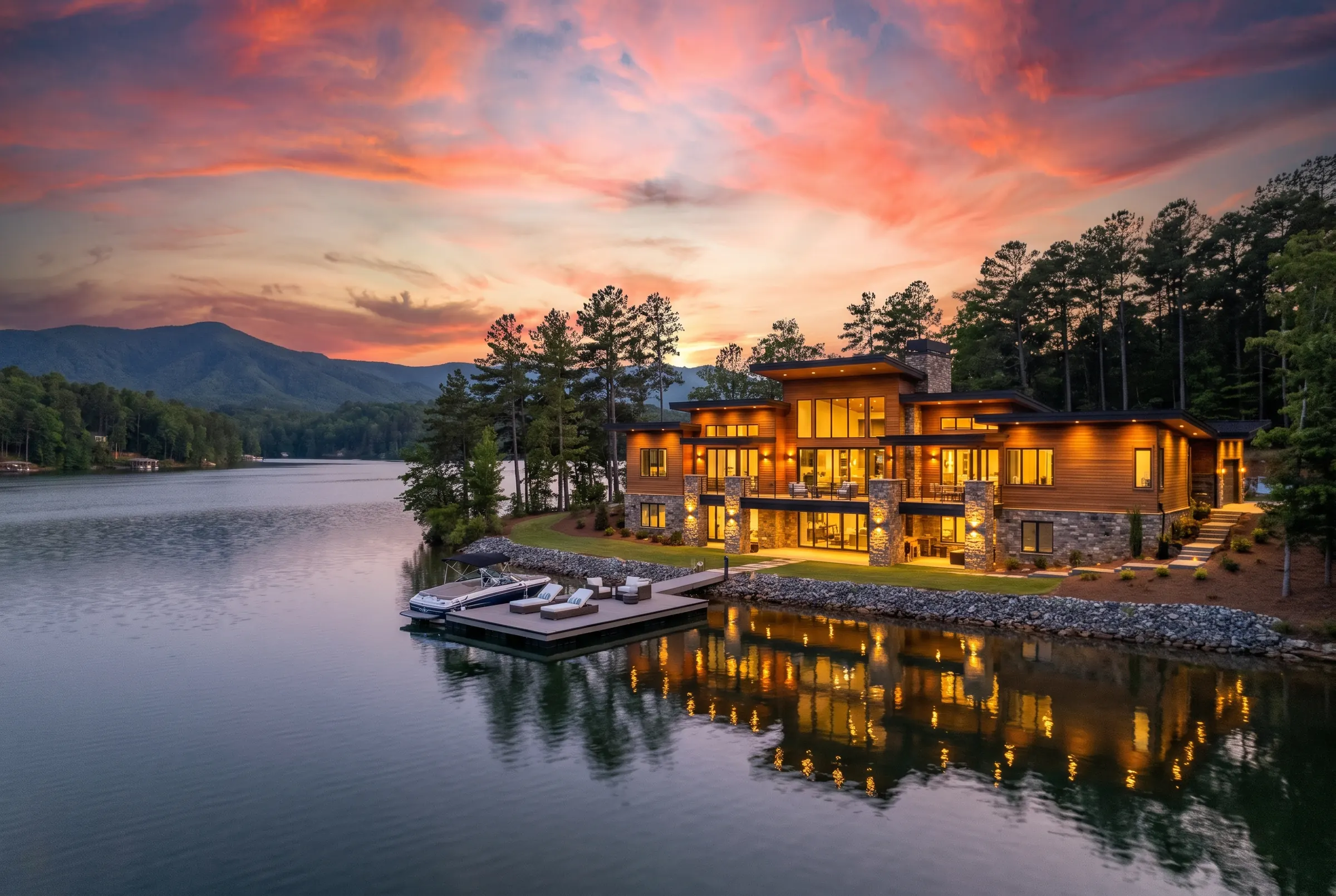
A three-bed on a hillside, living room and primary bedroom with a wall of glass facing west over a valley, listing planned for the third week of June. The compass said west, so the view's best daylight hour was morning with the sun behind the house, and its best sky was dusk.
Visit one, Tuesday at eleven: interiors throughout, with the view rooms shot from the side so the window showed the valley without being the exposure problem. Visit two, Wednesday at seven in the morning: the valley lit by low sun from behind the camera, shot from the deck, the sofa and the primary bedroom window, plus portrait frames of each. The photographer came back a third time, briefly, at dusk the same day because the sky was clear: the living room lit by lamps against the sunset, which became the main photo, and the deck with the valley lights coming on.
The gallery led with the dusk living room, then the morning valley from the deck, then the front of the house. The video opened on the deck at dusk, went inside, and finished on the morning valley. No edits were used, and the view in every frame was one the buyer could stand at the window and see at that hour. For the broader approach to a view property, see marketing a home with a view.
View-listing mistakes
One visit at the wrong hour. A west view shot at four in the afternoon is a white window.
A view clearer than reality. The buyer stands at the window on a normal day and feels misled.
No frame from where a person would stand. A view photographed from the garden fence is not the view from the house.
Dark rooms behind great views. Lamps on, always, so the room reads as a place to sit and look.
How this works in Rendprop
Add the interior set from visit one and the view set from visit two as landscape photos, with the portrait view frames for the vertical social video. Choose the dusk living room as the main photo when you publish the property website, and build the listing video from the view frames and the interiors; scene order and camera motion are planned automatically, so watch it once to see where the view lands. If you consider a blue sky edit on an exterior, the photo studio keeps it as a separate, disclosed version beside the untouched original, but on the view frames themselves the honest exposure is the whole product and the original should stand.
Next: go to the listing with your phone compass, stand at the best window, and write down the direction. The shoot times follow from that one number.