 RENDPROP
Short answer. When the yard is better than the house, lead with the yard: make it the main photo, open the video outside, shoot it in the evening when it reads as space rather than grass, and keep the interior photos clean, bright and brief. Put the lot size and what the yard holds at the top of the copy, and shoot in the season when the yard is at its best if you can choose.
When the yard is better than the house, lead with the yard. Make it the main photo, open the video on it, shoot it in the hour when it reads as space rather than as grass, and keep the interior photos clean, bright and brief so they support the lot instead of competing with it. The buyer for this listing is someone who wants land, trees, a garden or room for a workshop, and will accept an average house to get it. The listing should find that buyer in the first frame.
Lead with the lot
Most galleries lead with the front of the house because that is the habit. For a listing where the lot is the asset, the habit costs you the buyer who would have stopped scrolling for the half-acre and did not stop for the 1970s facade.
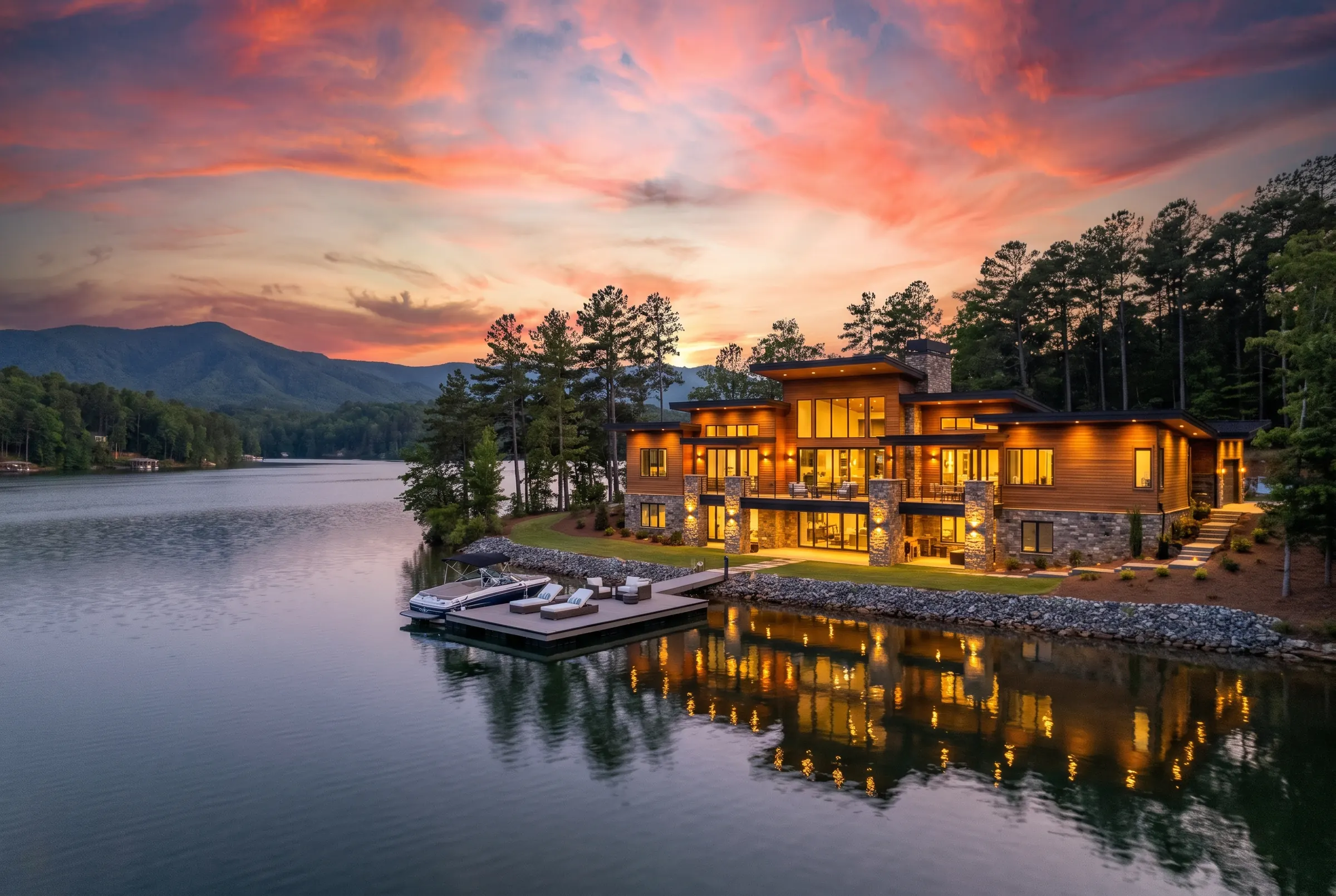
- Main photo: the yard with the house in it, shot from the back corner of the lot, in evening light. The house gives scale; the yard gives the reason.
- Second photo: the best feature of the yard up close: the mature oak, the vegetable garden in full growth, the fire pit with the chairs around it, the stream.
- Third photo: the house from the front, honest and clean.
- Then the interiors, in walking order, bright and uncluttered.
- Finish outside again: the view from the deck, the yard at dusk.
The decision of which frame leads is covered generally in which photo should be the main photo of a listing; for this property the answer is the one with the most sky and grass in it.
Shooting a yard so it reads as space, not grass
A big lawn photographed at noon from the back door is a green rectangle. The same lawn photographed an hour before sunset from the far corner, with the low sun raking across it and the house small at the end, is a property. Three things make the difference.
Low light. Early morning or the hour before sunset. Long shadows show the ground has shape and the trees have height. Midday flattens everything.
A low, wide frame from the edge. Shoot from the boundary looking back at the house, camera at waist height, so the foreground has depth and the house is the destination.
Signs of use. Two chairs by the fire pit, the garden in growth, a hammock between the trees, the path mown through longer grass. A yard in use is a yard the buyer can see themselves in; an empty lawn is maintenance.
Portrait frames of the same views make the strongest vertical social video this listing will have, because a tall frame with a tree running up it and sky at the top is what stops a thumb.
Interiors: clean, bright, brief
The house is average, so do not pretend otherwise and do not dwell. Every room gets one good frame, lit well, decluttered by hand, with the window showing the yard wherever a window does. Rooms that look out on the garden get a second frame shot toward the window. Skip the third bedroom from two angles. The interiors need to say clean, sound and ready; the yard says everything else.
The raised ranch on half an acre
A 1970s raised ranch, three beds, original kitchen in good order, on a half-acre lot with a mature oak, a large vegetable garden, a deck and a shed, backing onto a strip of woodland. Sellers ready in early May, which was lucky, because the garden was coming in and the oak was in leaf.
The shoot was split. Interiors at eleven in the morning, one frame per room, lamps on, the kitchen window framed to show the garden. Then the photographer came back at six in the evening and spent most of an hour outside: the yard from the back corner with the house at the end and the oak casting a long shadow, the garden beds up close, the deck with two chairs and a jug on the table, the path to the shed, the woodland edge, and the same views again as portrait frames. The last frame was the deck at dusk with the kitchen lit behind it.
The main photo was the back-corner frame. The video opened on it, moved to the oak and the garden, went inside through the deck door, walked the house in four scenes, and came back out to finish on the dusk deck. The voiceover led with the half acre and the oak and mentioned the kitchen once. The copy did the same, with the lot size in the first line. The sequence logic is in scene order for a listing video, and for this house the answer was outside, twice. The buyers were a couple who kept bees and wanted the woodland edge; they said the house was fine and the yard was why they came.
Where yard-first listings go wrong
Leading with the facade anyway. Habit. The buyer scrolls past.
Midday yard photos. A green rectangle with no shape.
Green lawn edits on a real lawn. If the yard is the asset, a disclosure on the yard photo is the last thing you want. Water it the week before and shoot it in the evening. If it is genuinely brown in a drought, show it; the trees and the space still sell.
Over-selling the house. Staging and edits on an ordinary interior raise expectations the showing cannot meet.
Shooting in the wrong season when you had a choice. A yard listing in May and the same yard in November are different listings. If the seller can wait for leaf, wait.
How this works in Rendprop
Add the evening yard frames and the brief interior set as landscape photos, with the portrait yard frames for the social cut. When you publish the property website, choose the back-corner yard frame as the main photo and type the details in. Build the listing video and the vertical social video from the same listing; scene order and camera motion are planned automatically, and a recorded voiceover lets you lead with the half acre. Leave the photo studio closed on the yard frames, and if you try a tidy pass on an interior, compare it with the untouched original before you choose it.
Next: walk to the back corner of the lot at six this evening and take the frame on your phone. If it is the best photo of the property, it is the main photo.