 RENDPROP
Short answer. Rural listing marketing has to show three things a drive-by cannot: the land and its edges, the distance to the things that matter (town, school, pavement), and the light at the hours the property is best. The property page carries that load, because buyers see the page before they make the long drive.
Rural listing marketing has to show three things a drive-by cannot: the land and where it ends, the distance to the things that matter (town, school, the nearest paved road, the hospital), and the light at the hours the property is at its best. The property page carries that load, because a buyer who lives an hour away studies the page before committing to the drive, and the ones who make the drive should find exactly what the page showed them.
The land: boundaries, outbuildings, water
Buyers of rural property are buying the land as much as the house, and the land is the hardest thing to photograph. Shoot it in pieces that add up. The approach: the road in, the gate or the drive, the first view of the house. The edges: a frame from each corner looking back toward the house, so a buyer understands where twelve acres start and stop. Each outbuilding from the outside and the inside, with something for scale, a tractor, a door, a person. Any water, pond, creek or well head, shown plainly. Fencing and its condition. Pasture or woods as they are this month. State the acreage from the survey or the deed, not from the seller's memory, and say in the listing text if any of it is unusable.
Distance: say it plainly
Rural buyers want to know the drive, and they want it in minutes and road types, not in adjectives. In the listing text and in the voiceover: fifteen minutes to the town with the grocery store, eight minutes on gravel to the paved county road, forty minutes to the regional hospital, the school bus stops at the end of the drive. If the internet is satellite or fixed wireless, say so and say the provider; it is the first question on the phone. If the mail is a box at the road and the trash is a dump run, say that too. Buyers who learn these things from the page make the drive. Buyers who learn them at the showing do not make an offer.
Light: shoot at the hours the land is best
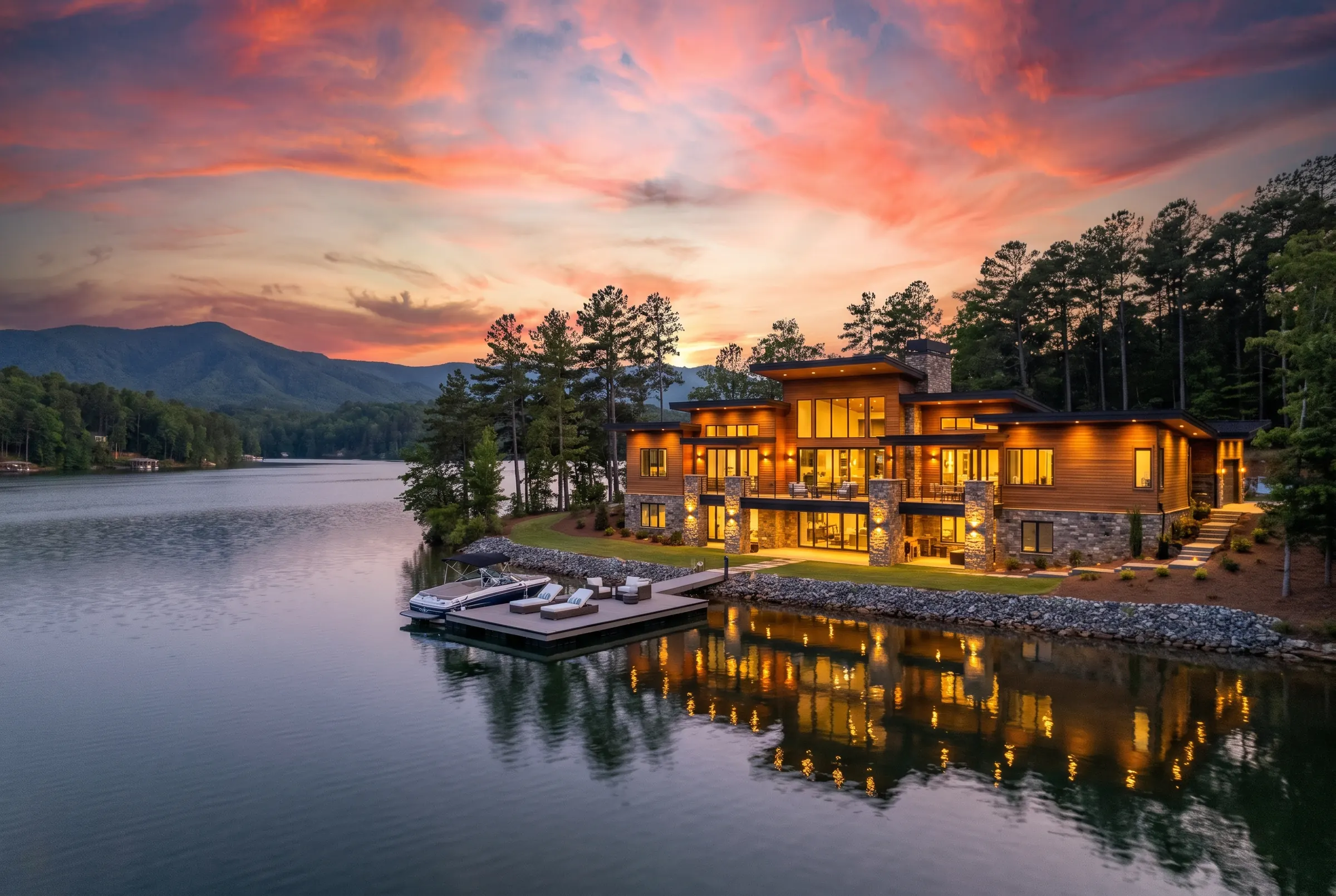
Open land is flat and harsh at noon and extraordinary an hour after sunrise and an hour before sunset. Book the photographer for a morning or an evening, not a midday slot, and ask for the house from the land as well as the land from the house. A real twilight from the end of the drive, every window lit and the barn light on, is usually the main photo for a rural listing; it says what the place feels like at the end of a day, which is what rural buyers are buying. Interiors in the same visit, lamps on, with at least one frame from inside looking out, because the view through the window is a selling point.
The video order for a rural property
A rural listing video should take the buyer down the drive before it shows them a kitchen. Approach, the first view of the house, the house itself, then the land in a loop back to the house, then interiors, then the view from inside. The voiceover carries the distances and the acreage in plain numbers. A recorded handheld walkthrough is useful here, more than for a suburban home, because a continuous walk from the back porch to the barn gives a sense of scale no still can. It is handheld footage, not drone footage, and viewers can watch it or scroll it on the page.
A 12-acre property with a barn, worked through
A 3-bed farmhouse on twelve acres with a 1940s barn and a pond, forty minutes from the nearest town of any size. The photographer arrives at 6:30 p.m. in late May: the drive, the first view, the house from the pasture, the barn inside and out with the tractor for scale, the pond from the house side, the fence line from the far corner, then interiors with the lamps on and a frame from the kitchen window toward the pond, then twilight from the end of the drive with every light on. The twilight is the main photo. The landscape video goes on the page with a voiceover that says twelve surveyed acres, four fenced, a pond, a barn with power, fifteen minutes to the county road, forty to town, satellite internet. The page carries the full gallery and the details, and the listing text repeats the distances. A handheld walkthrough from the porch to the barn is recorded on a second visit and added. Enquiries come from two states away, and each one has already read the distances.
Mistakes on rural listings
- Stating acreage from memory. Use the survey or the deed.
- Shooting at noon. Flat land in flat light looks like nothing.
- Hiding the gravel road, the satellite dish or the dump run. They are the first questions and the showing reveals them.
- A gallery of thirty interiors and two exteriors. On a rural listing the proportion is closer to even.
- Promising an aerial session and delivering something else. If there is no aerial session, say what the video is.
The page and the walkthrough in Rendprop
A Rendprop property page holds the full gallery, the details you type (price, beds, baths, square feet), the listing video that plays on request, your contact card and an enquiry form that asks for the date the visitor wants, which for a rural listing is usually a weekend. The landscape listing video is built from the photos, and a recorded walkthrough is optional and separate, handheld rather than drone, with live pacing cues while you film and uploads that resume if the connection drops, which it will at the far end of twelve acres. See the property website, and read filming a handheld walkthrough.
Next step: before the shoot, drive the route a buyer would take from the nearest town and time it, then write the distances into the listing text and the voiceover script. The photographer's evening slot is the second call to make.