 RENDPROP
Short answer. Motion on a still photo looks natural when it is slow, moves in one direction for the whole scene, and follows the lines of the room, such as a push toward the window or a drift along the island. It looks like a slideshow when it zooms in and out, changes direction mid-scene, uses the same move at the same speed on every frame, or pushes so far the photo goes soft. The photos you choose decide most of this.
Camera motion on a still photo reads as natural when it is slow, travels in one direction for the whole scene, and follows a line the room already has: a push toward the window, a drift along the island, a slow pull back from the deck. It reads as a slideshow when the motion pulses in and out, changes direction halfway, repeats the same move at the same speed on every frame, or pushes in so far the photo goes soft. Most of the difference is decided by which photos you pick, not by the motion itself.
What natural motion looks like
Think about what a person holding a camera would do in the room. They would walk slowly toward the view. They would turn their head along the length of the kitchen. They would step back from the fireplace to take in the whole wall. Motion that mimics one of those reads as footage.
Three qualities make it work.
- Slow. Slower than feels necessary. If the motion is noticeable, it is too fast. The viewer should sense the frame is alive without being able to say how.
- One direction. A push stays a push. A drift to the left keeps going left. The scene ends before the motion has to reverse.
- Along a line. Toward the window, along the counter, down the hall, across the yard. Rooms have lines, and motion that follows one feels like a reason to move.
The slideshow tells
The things that give a photo video away are consistent.
- The pulse. Zoom in, zoom out, next photo, zoom in, zoom out. The viewer's eye is being pushed and pulled with nothing to look at.
- The same move everywhere. Every frame pushes in at the same speed. After four photos it is a pattern, and patterns get scrolled.
- Motion with no subject. A slow push toward a blank wall. The motion asks the eye to go somewhere and there is nothing there.
- Too much push. A photo enlarged far enough goes soft and grainy. The motion reveals the limit of the file.
- Hard cuts between frames in motion. A fast push that cuts straight into another fast push feels like a flicker.
Photos that take motion well
Since the motion follows the photo, choose photos that have somewhere for it to go.
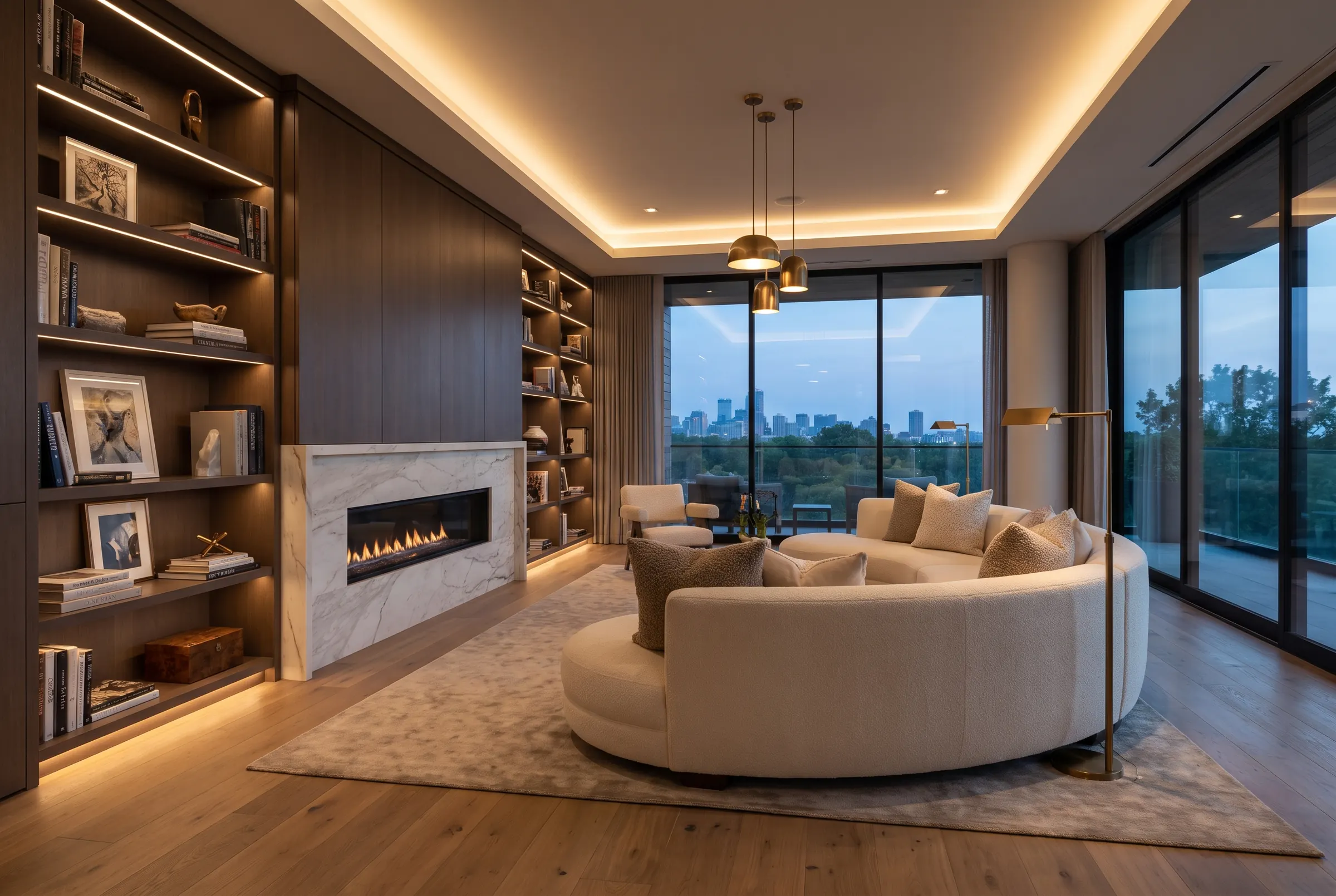
- A room with a window or a view at the far end. The push has a destination.
- A kitchen shot down the length of the island. The drift has a line.
- A wide exterior with the house in the middle third. A slow pull back or push in both work.
- A hallway or an open-plan space shot from one end. The camera can travel.
- A deck or yard with depth, something in the foreground and the house or trees behind.
Photos that fight it
- Flat, straight-on shots of a wall, a vanity or a closet. There is no depth for the motion to use.
- Tight shots of small rooms. Any push makes the room feel smaller.
- Photos already cropped close. Motion pushes them past their resolution.
- Frames with a strong tilt or a converging vertical. Motion makes the lean obvious.
- Photos with people, pets or a car in the drive. The eye goes to the thing that would move if this were footage, and it does not.
A worked example: two living room photos
Same living room, two frames from the photographer. The first is shot from the doorway, wide, with the fireplace on the left and the window wall at the far end. The second is a straight-on shot of the fireplace with a close mantel.
Put motion on the first and it reads as walking into the room toward the light. Put the same motion on the second and it reads as a zoom on a photo of a fireplace. The motion is identical. The photo made the difference. Pick the first for the video and keep the second for the gallery.
How motion is handled in Rendprop
Rendprop plans the camera motion and the scene order automatically when it builds the listing video or the vertical social video. You do not set a move per photo. What you control is the photo set: which frames go into the listing, which saved versions of any AI edits are used, and which rooms make the cut. Choosing frames with depth and a clear line, and leaving out flat, tight or tilted shots, is how you get motion that reads as footage. The outputs are described in the video features, and the selection method is in how to choose which listing photos to turn into a video.
Review the finished video before publishing and watch for any frame where the motion draws attention to itself. The fix is almost always to swap or remove the photo. Reviewing a listing video before you post it has the full list.
Next step: go through your current photo set and mark each frame as having a line or not. Build the video from the ones that do. The slideshow look mostly disappears at that step.